Rivy
Climate finance infrastructure powering clean energy access in Africa.
Rivy helps businesses and households access clean energy through financing.
Most people already want reliable power. The challenge was never awareness. It was access.
Solar adoption is often limited by high upfront costs, fragmented purchasing experiences, trust concerns, and financing barriers most companies aren't built to solve. Rivy exists to take those barriers apart, one at a time.
I led product design across Rivy's core initiatives — financing journeys, credit experiences, onboarding, commerce, and the design system underneath all of it. I worked closely with product, engineering, operations, credit, sales, and leadership, because a financing product like this doesn't get designed inside a design tool alone. It gets designed in the room with everyone who has to make it work.
Access Changes Everything
For years, the working assumption in clean energy was that adoption is an awareness problem. Tell people solar works, and they will buy it.
That was never true in the markets we served. People already wanted reliable power. They were tired of generators, tired of blackouts, tired of paying twice for electricity that still didn't show up.
What they didn't have was a way to pay for it.
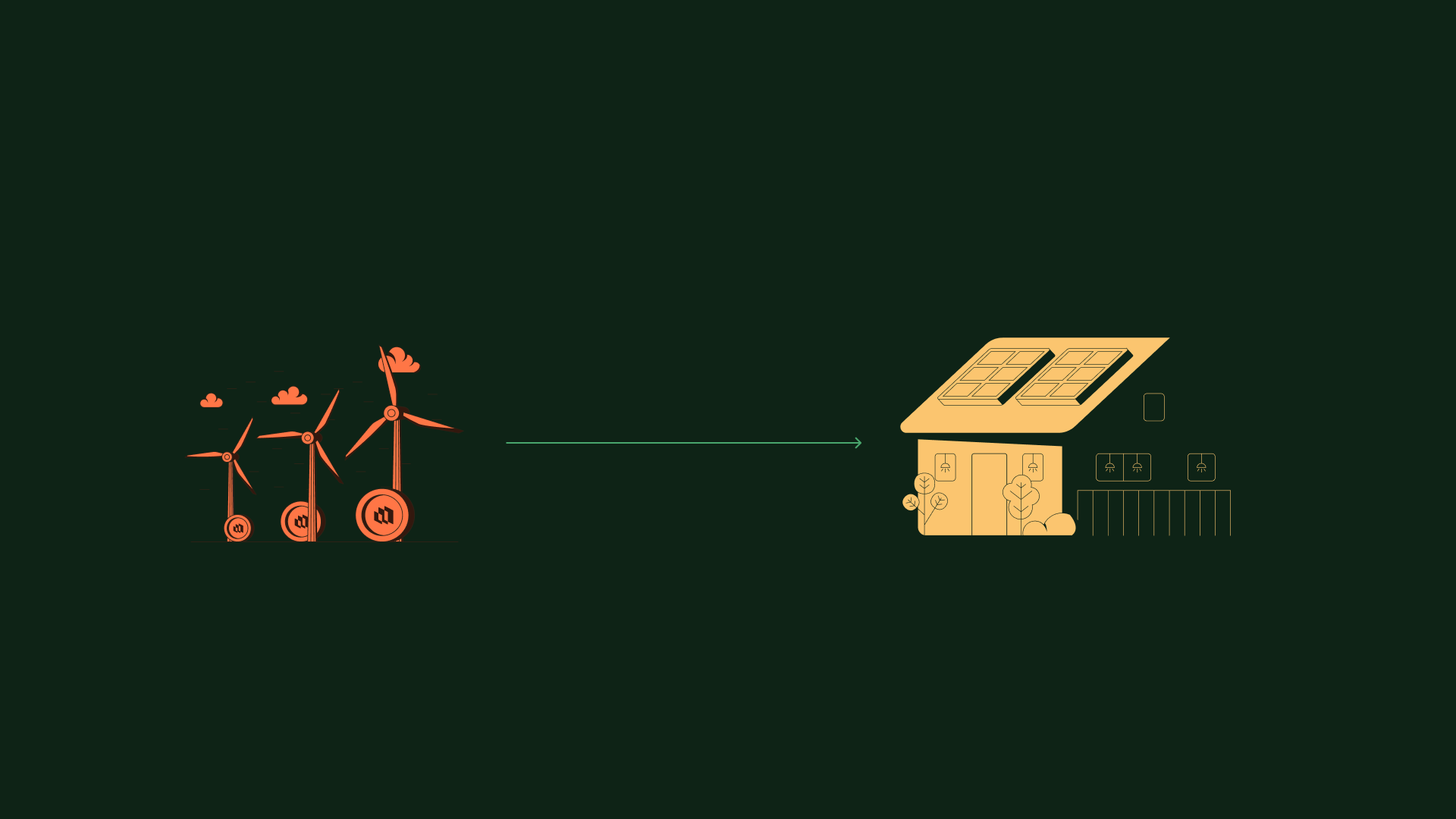
A solar system that pays for itself in two years is still unaffordable if you need to find the money today. That reframes the whole problem. Clean energy adoption is not primarily a hardware problem, or even an education problem. It is a cash flow problem.
Cash flow problems are financing problems. And financing problems, it turns out, are product design problems. How someone applies. How long they wait. How much they have to prove upfront. How clearly they understand what they are agreeing to. Every one of those is a design decision before it is a financial one.
Designing For Trust
Nobody applies for financing casually. Before someone shares their income, their ID, their bank details, they need to believe two things: that the company is real, and that the offer is honest.
That belief has to be earned before the first form field. If a customer hesitates on question three of an application, the problem is rarely question three. It is usually everything before it that failed to build enough confidence to get there.
So a lot of the work was not about the financing product itself. It was about reducing the number of moments where someone could reasonably think, wait, is this legitimate?
Clear terms instead of fine print. Showing people exactly what they would pay, and when, before asking them to commit. Designing the moments where uncertainty runs highest — income verification, credit checks, deposit amounts — with more care than the moments that already felt easy.
Trust is not a feeling you sprinkle on at the end. It is a structural property of how a product is built.
The Journey Beyond Approval
Most financing companies optimize for one moment: approval. Get the applicant across that line, and the job is considered done.
We did not see it that way. Approval is the middle of the story, not the end.
A customer's relationship with Rivy starts before they have heard of financing — comparing solar options, price-checking with local vendors. It continues long after approval, through months or years of repayment, service, and the actual experience of living with the power they now have.
Design only for approval, and you optimize for a moment that means nothing on its own. A loan that gets approved but never repaid comfortably, never followed by a good ongoing experience, is not a success. It is a support ticket waiting to happen.
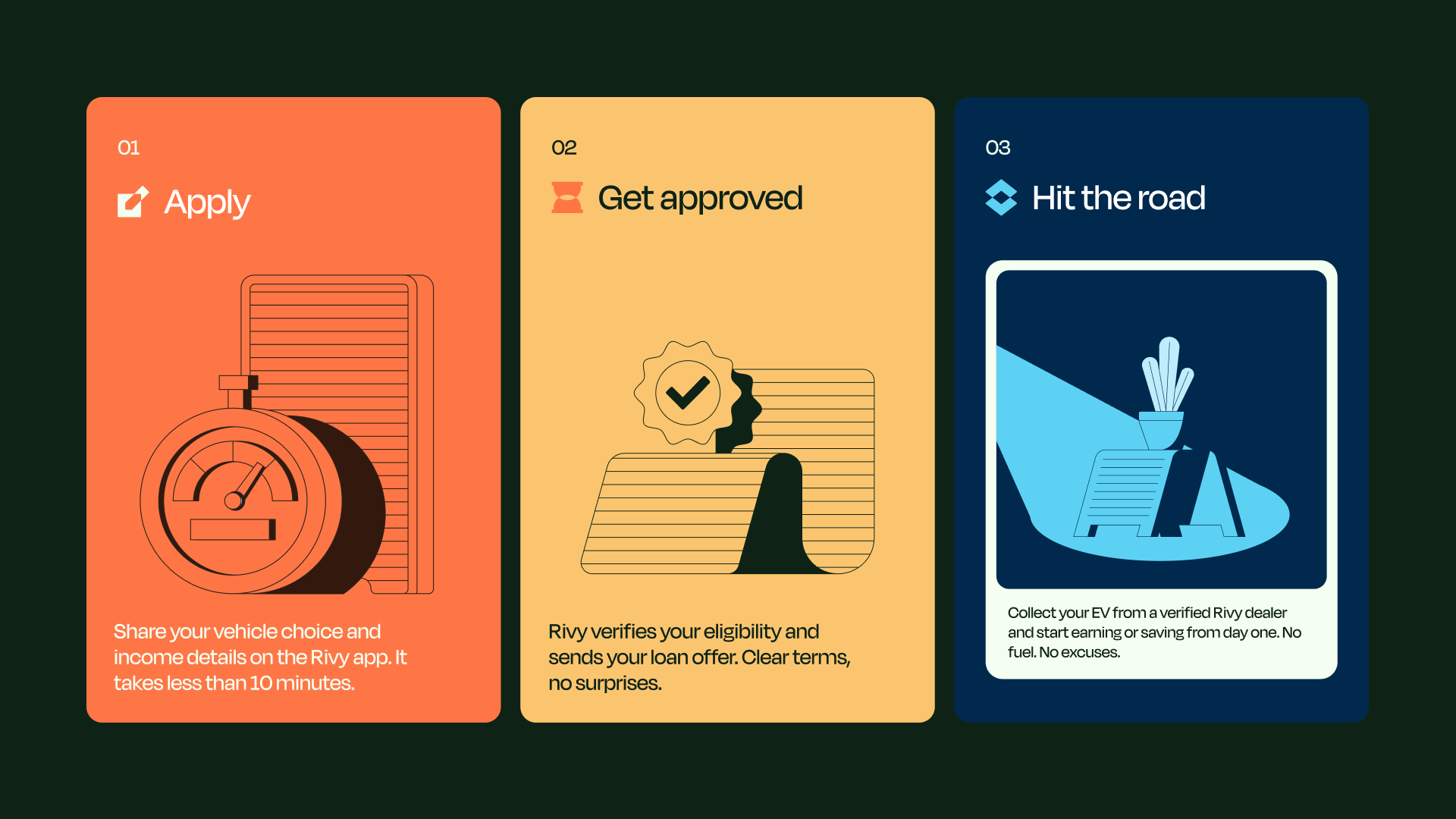
So we designed the whole arc — discovery, application, approval, repayment, and the long tail of actually using what you financed. Each stage feeds the next. A confusing repayment experience erodes trust that took months to build during onboarding. A good one reinforces it, and often turns a customer into a referral.
Building Systems, Not Screens
None of this lived in a single interface. It lived across a system.
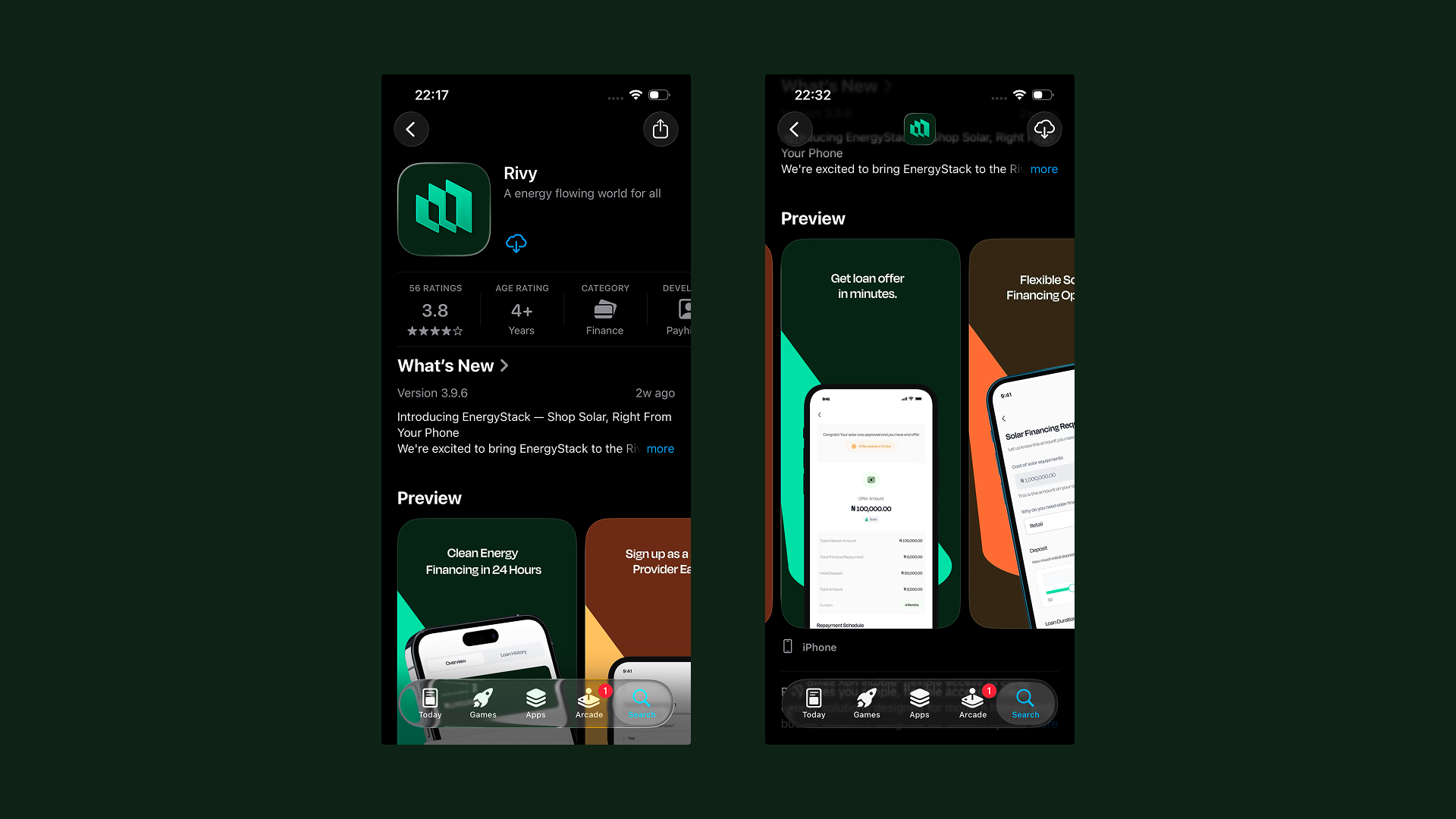
Financing applications had to work for a first-time borrower and a returning one. Credit assessment experiences had to translate underwriting logic into something a customer could actually follow, not a black box that just says yes or no. Onboarding had to set expectations that repayment would later need to honor. Merchant tools had to let sales teams originate applications without a credit background. EnergyStack, our storefront, had to make choosing a solar product feel as ordinary as any other purchase. Repayment experiences had to keep working long after the excitement of a new purchase had faded.
Design each of those in isolation and you end up with five well-crafted screens that quietly disagree with each other. A merchant promises something onboarding does not reflect. Repayment terms read differently from the ones shown at application. Credit language shifts from one touchpoint to the next.
The real work was making all of it feel like one coherent system — one voice, one set of patterns, one shared logic — so that whichever door a customer walked through, the product behind it felt like it was built by the same team, telling the same story.
What We Learned
People choose confidence over complexity.
Nobody wants more options presented at once. They want to feel certain about the one option in front of them.
Trust compounds.
Every interaction either adds to it or spends it. There is no neutral moment in a financing journey.
Good products remove friction before users notice it exists.
The best moments in the flow were the ones customers never mentioned, because nothing went wrong.
Access is often a design problem wearing a financial problem's clothes.
Fix the experience, and the financial barrier gets smaller than anyone expected.
Design is most valuable when it helps two sides move forward together.
A business managing risk, and a customer who just wants reliable power. The best solutions here were never about picking one side. They were about finding the version that let both move at the same time.
Rivy's financing systems are live and still evolving, and much of this work is covered by an NDA. I can't publish detailed interface walkthroughs, underwriting logic, or internal metrics here.
What I can share is the design work itself, and the product it shaped.